
sample 4×6 shipping label pdf
Understanding 4×6 Shipping Labels
4×6 shipping labels are commonly used for online orders, offering a balance between space for address details and printer compatibility, often available as a PDF․
These labels streamline the shipping process, providing a standardized format for carriers and ensuring clear address visibility during transit, like Avery 5292․
Utilizing a 4×6 size optimizes label usage, reducing waste and costs, while remaining easily readable for automated sorting systems, and can be generated via Zapier․
What is a 4×6 Shipping Label?
A 4×6 shipping label refers to a label with dimensions of 4 inches in width and 6 inches in height․ This specific size has become a standard in the e-commerce and shipping industries due to its efficiency and compatibility with various printing methods and carrier requirements․ Often, these labels are generated and downloaded as a PDF document, ready for printing․

The 4×6 format provides ample space to clearly display crucial shipping information, including the sender’s and recipient’s addresses, a barcode for tracking, and any necessary handling instructions․ It’s a popular choice for businesses utilizing thermal printers, as well as standard inkjet or laser printers, especially when using pre-designed templates like Avery 5292․
The widespread adoption of this size also facilitates automated sorting processes within shipping carriers’ networks, ensuring faster and more accurate delivery․ Many online label generators and platforms, including those integrated with Zapier, readily support the creation of 4×6 labels․
Why Use a 4×6 Label Size?
Choosing a 4×6 label size offers several advantages for businesses and individuals alike․ Its dimensions strike an optimal balance between providing sufficient space for all necessary shipping details – addresses, barcodes, and handling instructions – and minimizing wasted label material․ Generating these labels as a PDF ensures consistent formatting across different systems․
This size is widely accepted by major shipping carriers, streamlining the fulfillment process and reducing the risk of delays due to label incompatibility․ Utilizing pre-designed templates, such as those compatible with Avery 5292, simplifies label creation and ensures accuracy․
Furthermore, the 4×6 format is well-suited for thermal printers, offering fast and efficient printing․ Integration with tools like Zapier allows for automated label generation, saving time and reducing manual errors, making it a practical choice for high-volume shippers․

Creating a 4×6 Shipping Label PDF
PDF creation for 4×6 shipping labels involves utilizing software like Microsoft Word, Adobe Illustrator, or online generators to design and export labels․
These tools allow for precise formatting and ensure compatibility across various printing systems, often leveraging pre-built templates․
Software Options for PDF Creation
Several software options cater to creating 4×6 shipping label PDFs, each offering unique features and benefits․ Adobe Illustrator and Adobe InDesign provide professional-grade design capabilities, ideal for customized label layouts and branding, ensuring high-resolution output․
Microsoft Word, while less specialized, can be effectively used with proper margin settings and table configurations to create basic 4×6 labels․ Online label generators offer a convenient, browser-based solution, often integrating with shipping platforms and providing pre-designed templates, like those compatible with Avery 5292․
Furthermore, simple PDF creation can be achieved through applications like Apple Pages or Numbers․ A Flask app example demonstrates generating labels via API requests or Zapier integration, automating the process․ The choice depends on design complexity, budget, and integration needs․
Using Microsoft Word for 4×6 Labels
Creating 4×6 shipping labels in Microsoft Word requires precise configuration․ Begin by setting custom page size dimensions to 4 inches wide by 6 inches high․ Insert a table with one cell, then adjust the table dimensions to match the page size, removing borders for a clean look․
Utilize mail merge features to populate address data from a spreadsheet, streamlining the process for multiple labels․ Ensure accurate margins are set to prevent printing issues․ Consider using pre-designed templates, often compatible with Avery 5292, as a starting point․
Save the document as a PDF to preserve formatting and ensure compatibility across different systems․ While less sophisticated than dedicated design software, Word offers a readily available solution for basic shipping label creation․
Adobe Illustrator and 4×6 Label Design
Adobe Illustrator provides robust control for designing professional 4×6 shipping labels․ Start by creating a new document with precise dimensions – 4 inches by 6 inches – and set the color mode to CMYK for optimal print quality․ Utilize guides and rulers to ensure accurate alignment of address blocks and barcodes․

Illustrator’s vector-based tools allow for scalable graphics and crisp text, crucial for clear readability․ Integrate variable data using data merge features to personalize labels efficiently․ Export the final design as a high-resolution PDF, embedding fonts to prevent substitution․
Consider utilizing templates, including those compatible with Avery 5292, as a foundation for your designs, ensuring proper margins and bleed areas for professional results․
Online 4×6 Label Generators
Numerous online platforms simplify 4×6 shipping label creation, offering user-friendly interfaces and pre-designed templates․ These generators often integrate with popular e-commerce platforms and shipping carriers, streamlining the process․ Many allow direct PDF download for easy printing․
Services like Shippo, EasyPost, and others provide tools to input recipient and sender addresses, select shipping services, and generate compliant labels․ Some offer Zapier integration for automated label creation from various apps․
These tools are ideal for businesses needing quick and efficient label production without the complexity of desktop publishing software, often supporting Avery 5292 compatibility․
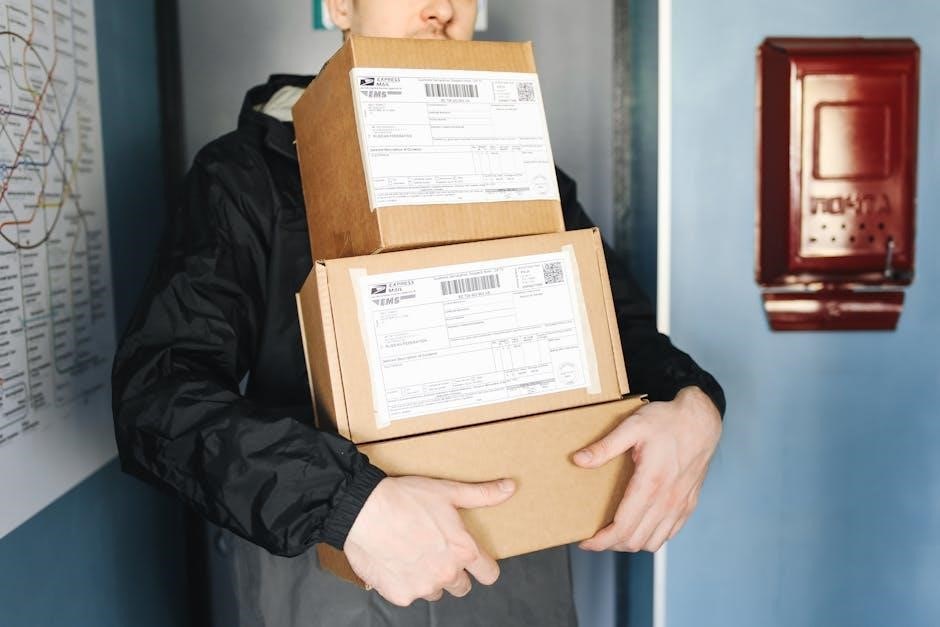
Essential Elements of a Shipping Label
Shipping labels require a complete sender and recipient address, a clearly visible tracking number, and details about the chosen shipping service, often in PDF format․
Accurate information ensures successful delivery and allows for tracking throughout the shipping process, utilizing standardized formats like Avery 5292․
Sender Address Information
Accurate sender details are crucial for returns and delivery confirmation, typically displayed prominently on the upper left of a 4×6 shipping label PDF․ This includes the sender’s full name or company name, complete street address (including apartment or suite number, if applicable), city, state, and zip code․
Providing a valid phone number is also highly recommended, enabling the carrier to contact the sender if issues arise during transit․ Incorrect or incomplete sender information can lead to delays or non-delivery of the package․ Utilizing pre-designed templates, like those compatible with Avery 5292, can help ensure all necessary fields are included and correctly formatted․ Double-checking this information before printing is essential for a smooth shipping process, especially when generating labels via Zapier or other automated systems․
A clear return address guarantees the package can be sent back if undeliverable․
Recipient Address Information
Precise recipient addressing is paramount for successful delivery, typically positioned on the right side of a 4×6 shipping label PDF․ This necessitates the recipient’s full name, complete street address (including apartment, suite, or building number), city, state, and zip code․ Accuracy is key; even minor errors can cause significant delays or misdelivery․
Confirming the zip code is particularly important, as incorrect codes can route the package to the wrong location․ Utilizing templates, such as those for Avery 5292, helps standardize the format and minimize errors․ When generating labels through platforms like Zapier, ensure data mapping is correct to avoid address discrepancies․ A clearly printed and legible recipient address is vital for automated sorting systems and efficient delivery․
Verify the address with the customer before printing!
Tracking Number Placement
The tracking number, crucial for shipment visibility, is strategically placed on a 4×6 shipping label PDF, usually prominently displayed near the recipient’s address or in a dedicated barcode area․ Its placement must ensure scannability by carriers like UPS, FedEx, or USPS․ Often, it’s positioned in the lower right corner or along the bottom edge for easy access during sorting․
Using standardized templates, such as those compatible with Avery 5292, guarantees consistent placement․ When utilizing Zapier for automated label generation, confirm the tracking number field is correctly mapped․ A clear, scannable barcode containing the tracking number is essential for real-time shipment updates․ Ensure sufficient white space surrounds the barcode to prevent scanning errors․
Double-check the number before finalizing the PDF!
Shipping Service Details
Shipping service details on a 4×6 shipping label PDF clearly indicate the chosen delivery method – for example, Priority Mail, Ground, or Express – influencing delivery speed and cost․ This information is vital for both the sender and the carrier, ensuring proper handling and accurate tracking․ These details are often positioned near the sender’s address or alongside the tracking number․
When creating labels using templates, like those for Avery 5292, or through automation with Zapier, verify the correct service is selected․ Including service-specific codes or logos can further clarify the shipping method․ Accurate service details prevent delays and ensure the package is routed efficiently․
Always confirm the selected service aligns with your shipping needs!

PDF Specifics for Shipping Labels
PDF format ensures consistent label appearance across devices, crucial for printing 4×6 shipping labels, maintaining clarity and preventing formatting issues during the shipping process․
PDFs are universally compatible and support high-resolution graphics, vital for barcode readability and address legibility, often generated via online templates․
PDF Format Advantages
PDF (Portable Document Format) offers significant advantages when creating and printing 4×6 shipping labels․ Primarily, a PDF preserves the original formatting, ensuring the label appears exactly as designed, regardless of the operating system or software used to view it․ This consistency is vital for accurate address readability and barcode scanning․
Furthermore, PDFs are platform-independent, meaning they can be opened and printed on Windows, macOS, and Linux systems without alteration․ They also support high-resolution graphics, essential for clear printing of addresses and carrier-specific logos․ The format’s ability to embed fonts guarantees that text will display correctly, even if the recipient doesn’t have those fonts installed․
PDFs are also relatively secure, allowing you to control access and prevent unauthorized modifications to your shipping label data․ Many online templates and services, like those compatible with Avery 5292, generate labels directly as PDFs, streamlining the process and ensuring compatibility with most printers․
Ensuring PDF Print Quality
Achieving high-quality prints for 4×6 shipping labels from a PDF requires careful attention to several factors․ First, verify your PDF is saved with a high enough resolution – 300 DPI is generally recommended for sharp text and barcodes․ When printing, select the appropriate paper type in your printer settings; thermal label stock demands different settings than inkjet or laser paper․
Always perform a test print on plain paper before loading your label sheets to confirm alignment and color accuracy․ Calibrate your printer regularly to maintain consistent print quality․ Ensure your PDF viewer isn’t scaling the document, as this can distort the label dimensions․
Utilizing templates designed for Avery 5292 or similar label formats often pre-configures these settings, simplifying the process․ Finally, consider the quality of your ink or toner, as faded or streaky prints can render barcodes unreadable, causing shipping delays․
PDF Security Considerations
When utilizing PDFs for 4×6 shipping labels, security is paramount, especially concerning sensitive address and tracking information․ Consider password protecting your PDFs to restrict unauthorized access, particularly if they contain customer data․ Implement permissions to prevent editing or printing by unintended recipients․
Be cautious when sharing PDFs via email or cloud storage, ensuring the platform employs encryption․ Regularly scan your systems for malware that could compromise PDF security․ When generating labels via APIs or Zapier, verify the security protocols of those services․
Avoid storing PDFs with sensitive data on unsecured networks․ Utilizing digital signatures can authenticate the document’s origin and ensure its integrity․ Regularly review and update your security practices to mitigate evolving threats, protecting both your business and your customers․

Printing 4×6 Shipping Labels
4×6 shipping labels require compatible printers – thermal options are efficient, while inkjet/laser work with appropriate label stock, ensuring clear PDF output․
Proper printer settings, including resolution and paper type, are crucial for optimal print quality and accurate barcode scanning, like Avery 5292․
Printer Compatibility (Thermal vs․ Inkjet/Laser)
Thermal printers are specifically designed for shipping labels, offering speed and reliability, directly printing from a PDF without ink, ideal for high-volume shipping․ They utilize heat to create images on special thermal label stock, resulting in durable, smudge-proof labels․
Inkjet and laser printers, while versatile, require careful label stock selection․ Standard paper won’t adhere properly․ Choose labels specifically designed for your printer type – inkjet or laser – to prevent smudging or toner issues․ Ensure your PDF settings are optimized for the chosen printer․
Consider print volume; thermal printers excel with many labels, while inkjet/laser are suitable for lower quantities․ Avery 5292 compatible labels are available for both, offering a convenient solution․ Calibration is key for accurate alignment, regardless of printer type, ensuring scannability․
Label Stock Selection
Choosing the right label stock is crucial for a successful 4×6 shipping label print․ Thermal transfer labels are essential for thermal printers, offering durability and clear barcode scanning․ Direct thermal labels are cheaper but fade over time, suitable for short-term shipping․
For inkjet or laser printers, select labels specifically designed for your printer type․ Avery 5292 labels are a popular choice, offering compatibility and adhesive strength․ Consider the material – paper or polypropylene – based on shipping conditions․
Water-resistant labels are vital for shipments exposed to moisture․ Ensure the label stock’s adhesive is strong enough for your package surface․ Proper stock selection prevents smudging, peeling, and scanning errors, ensuring a smooth delivery process from your PDF․
Print Settings for Optimal Results
Achieving clear, scannable 4×6 shipping labels requires precise print settings․ Select the correct paper size – 4×6 inches – within your printer settings․ Choose the appropriate media type: label stock for inkjet/laser or thermal paper for thermal printers․
Set print quality to “High” or “Best” for sharp text and barcodes․ Disable any scaling options to ensure the label prints at its actual size, crucial when using a PDF template․ Verify barcode readability by performing a test print․
Adjust darkness settings on thermal printers for optimal barcode contrast․ For inkjet/laser, ensure sufficient ink or toner levels․ Proper settings prevent smudging, fading, and scanning issues, guaranteeing efficient package handling․

4×6 Label Templates & Resources
Numerous free 4×6 shipping label templates are available online, often compatible with Avery 5292, simplifying label creation as a PDF․
Resources like Avery Design & Print Online offer pre-designed options, while Zapier integration automates label generation from various platforms․
Free 4×6 Shipping Label Templates
Numerous websites offer downloadable, free 4×6 shipping label templates in PDF format, catering to various design preferences and shipping carrier requirements․ These templates often mimic the layout of popular label sheets like Avery 5292, ensuring compatibility with standard printers․
Many templates are editable, allowing users to customize fields for sender and recipient addresses, tracking numbers, and shipping service details․ Online platforms provide user-friendly interfaces for inputting information directly into the template before downloading the completed PDF․
Searching for “free 4×6 shipping label template PDF” yields a wealth of options, including designs suitable for inkjet or laser printers․ Some templates are specifically tailored for e-commerce platforms, streamlining the shipping process for online businesses․ Utilizing these resources can significantly reduce costs and save time compared to creating labels from scratch․
Avery 5292 Template Compatibility
Avery 5292 is a widely recognized and utilized 4×6 shipping label template, offering excellent compatibility with numerous printing software programs and online label generators․ Its standardized dimensions ensure seamless integration with most thermal and inkjet/laser printers․
Many free 4×6 shipping label templates are designed to be directly compatible with Avery 5292, allowing users to easily import and customize pre-designed layouts․ This eliminates the need for manual adjustments to label size and alignment․
Avery also provides its own Design & Print Online platform, offering pre-designed templates and tools for creating custom labels specifically for Avery 5292 sheets․ This ensures optimal print quality and accurate label placement, simplifying the shipping label creation process for businesses and individuals alike․
Zapier Integration for Label Generation
Zapier offers a powerful automation solution for generating 4×6 shipping labels, streamlining the process by connecting various applications and services; Users can trigger label creation based on events in other apps, such as new orders in an e-commerce platform․
Through Zapier, you can automatically populate a 4×6 shipping label PDF template with customer data, eliminating manual data entry and reducing errors․ This integration supports various PDF creation tools and label printers․
Zapier’s integration allows for a fully automated workflow, from receiving order information to generating and printing the shipping label․ This is particularly beneficial for businesses with high shipping volumes, enhancing efficiency and saving valuable time, utilizing a simple API request․
Troubleshooting Common Issues
Common problems include label alignment, PDF printing errors, and microphone issues on Surface devices; ensure correct print settings and updated drivers for resolution․
Verify printer compatibility and label stock selection to avoid jamming or smudging, especially when using 4×6 shipping label PDF templates․
Label Alignment Problems
Misaligned 4×6 shipping labels are a frequent frustration, often stemming from incorrect printer settings or template configurations․ When using a sample 4×6 shipping label PDF, ensure your printer’s margins are properly set to avoid cropping address information․
Check the PDF scaling options; printing at “Actual Size” or 100% is crucial․ Experiment with slight adjustments to the horizontal and vertical position within your printer settings․ If utilizing Avery 5292 templates, confirm the template is correctly selected within your design software․
Sometimes, the issue lies with the label sheet itself – ensure it’s loaded correctly into the printer tray․ A test print on a single label can quickly identify alignment issues before committing to an entire sheet․ Consider recalibrating your printer if problems persist, and verify the PDF is designed precisely to 4×6 dimensions․
PDF Printing Errors
Encountering errors when printing a sample 4×6 shipping label PDF can disrupt workflow․ Common issues include garbled text, missing elements, or a completely blank page․ First, verify your PDF reader is up-to-date, as older versions may have compatibility problems․
Ensure the PDF isn’t corrupted by attempting to open it on a different device or with alternative PDF software․ Check printer driver compatibility; an outdated or incorrect driver can cause rendering errors․ When using templates like Avery 5292, confirm the PDF was generated correctly․
Try printing to a different printer if available․ If the problem persists, consider “printing as image” within your PDF settings, which can sometimes bypass rendering issues․ Finally, re-saving the PDF may resolve underlying structural problems․
Low Microphone Input Levels (Surface Devices)
While seemingly unrelated to sample 4×6 shipping label PDFs, users report consistently low microphone input levels on Surface Laptop 5, Surface Pro 8, and Surface Laptop Studio devices․ This issue impacts voice clarity during online meetings or dictation, despite settings being maximized to 100%․
Troubleshooting steps include verifying microphone privacy settings in Windows, ensuring the correct microphone is selected as the default input device, and updating audio drivers․ Some users suspect a hardware-level failure of the internal microphones․
The Surface Laptop Studio boasts dual Studio Mics, but even these can experience low input․ A clean boot of Windows can isolate software conflicts, and running the Surface Diagnostic Toolkit may identify hardware problems․

Surface Laptop & Microphone Considerations
Surface Laptops prioritize audio quality with features like 1080p HD cameras and dual Studio Mics, though some users report low input levels, unrelated to PDF labels․
Surface Laptop 5 Microphone Issues
Several Surface Laptop 5 users have encountered unexpectedly low microphone input levels, even with settings maximized to 100%․ This issue appears across various applications, impacting call clarity and recording quality․ Initial troubleshooting steps involve verifying driver updates and ensuring the correct microphone is selected as the default input device within Windows settings․
Despite these efforts, the problem often persists, suggesting a potential hardware-level fault․ Some speculate a firmware incompatibility or a manufacturing defect affecting microphone sensitivity․ While unrelated to generating a 4×6 shipping label PDF, the issue highlights potential quality control concerns․ Users have reported that software checks return clear results, further indicating a hardware problem․ The issue doesn’t seem to be related to label printing or Zapier integration․
Surface Pro 8 Microphone Issues
Similar to the Surface Laptop 5, Surface Pro 8 users are reporting significantly low microphone input levels, even when fully maximized in system settings․ This impacts voice chat, online meetings, and recording applications, creating frustration for users relying on the device for communication․ The problem isn’t isolated to specific software; it occurs across multiple platforms․
Troubleshooting steps, including driver updates and default device verification, often fail to resolve the issue, pointing towards a potential hardware defect․ This is unrelated to creating a 4×6 shipping label PDF or utilizing Avery 5292 templates․ Users suspect a hardware-level failure, especially when software diagnostics show no errors․ The issue seems widespread, prompting discussions about potential manufacturing flaws․
Surface Laptop Studio Audio Features
The Surface Laptop Studio boasts impressive audio capabilities designed for content creation and immersive experiences, though unrelated to generating a 4×6 shipping label PDF․ It features dual Studio Mics with far-field voice pickup, ensuring clear audio recording and communication, even in noisy environments․ These mics are optimized for Windows 11 voice clarity features․
Furthermore, the Laptop Studio incorporates Quad Omnisonic speakers with Dolby Atmos, delivering rich, spatial sound for music, movies, and gaming․ This provides a dynamic audio landscape, enhancing overall multimedia consumption․ While not directly linked to Avery 5292 label templates or Zapier integration, the audio quality supports professional workflows․