
what great teachers do differently pdf
Great teaching profoundly impacts learning, offering a credible summary of impactful practices․ This model aids teachers in anonymously assessing strengths and pinpointing development areas․
Defining Great Teaching in the 21st Century
Defining great teaching today transcends traditional methods, demanding adaptability and a focus on impactful practices․ It’s about fostering a learning environment where students thrive, driven by a commitment to continuous improvement and self-reflection․ This involves regularly assessing one’s strengths and identifying areas for growth, utilizing available tools and resources․
The core lies in understanding what truly differentiates effective educators․ It’s not merely delivering content, but structuring lessons for optimal understanding, prioritizing key learning objectives, and employing varied instructional strategies․ Teachers must frequently check for comprehension, facilitate academic discussions, and provide constructive feedback․
Furthermore, embracing research evidence and seeking peer feedback are crucial components․ This model provides a framework for teacher learning, enabling educators to navigate the complexities of the 21st-century classroom and maximize student success․
The “What Great Teachers Do Differently” Framework
The “What Great Teachers Do Differently” framework centers on a model for continuous teacher learning, providing a credible summary of elements impacting student outcomes․ This framework encourages teachers to prioritize specific areas for development, utilizing element-specific surveys to gather targeted feedback․ It’s a cyclical process of self-assessment, learning, and adaptation․
Key components include effective classroom structuring, prioritizing learning objectives, and strategic lesson planning․ Great teachers vary activities, employ multi-sensory approaches, and integrate auditory and visual cues․ They also excel at explicit vocabulary instruction and providing accessible materials․
Crucially, this framework emphasizes the teacher’s role in actively seeking improvement through research, peer collaboration, and self-reflection, ultimately fostering a culture of ongoing professional growth and enhanced teaching practice․
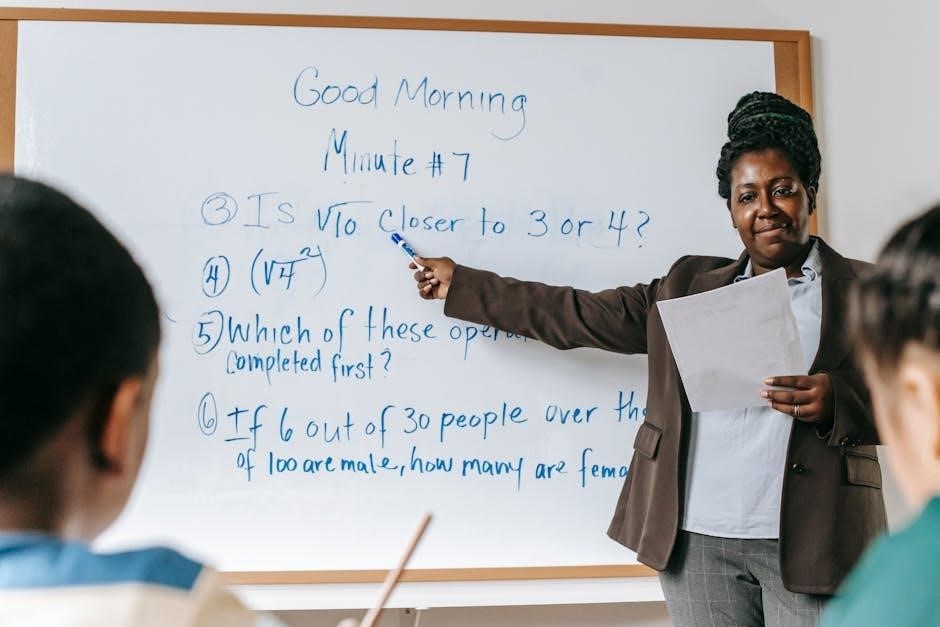
Core Elements of Great Teaching Practice
Effective practice involves structuring classrooms, prioritizing learning, and planning lessons with clear objectives—all vital components for impactful instruction and student success․
Classroom Structuring and Organization
A well-structured classroom is foundational to effective teaching, directly influencing student engagement and learning outcomes․ Great teachers meticulously organize their learning environments to minimize distractions and maximize instructional time․ This involves establishing clear routines and procedures that students understand and consistently follow, fostering a sense of predictability and security․
Furthermore, physical arrangement plays a crucial role; thoughtful seating arrangements can promote collaboration, facilitate movement, and ensure all students have optimal visibility․ Organization extends beyond the physical space to encompass materials and resources, ensuring they are readily accessible and efficiently managed․ This proactive approach to classroom management allows teachers to focus on delivering high-quality instruction rather than constantly addressing disruptive behaviors or logistical challenges․ Ultimately, a structured environment empowers students to take ownership of their learning and thrive academically․
Prioritizing Key Learning Objectives
Exceptional teachers don’t attempt to cover everything; they strategically prioritize key learning objectives․ This involves a deep understanding of curriculum standards and a clear vision of what students must know and be able to do․ Before each lesson, great teachers explicitly state these goals and objectives, ensuring students understand the purpose of their learning․
This focused approach allows for deeper exploration of essential concepts, rather than superficial coverage of a broad range of topics․ By concentrating on core skills and knowledge, teachers can provide targeted instruction and assess student understanding more effectively․ Prioritization also enables differentiation, allowing teachers to tailor instruction to meet the diverse needs of learners․ Ultimately, focusing on what truly matters maximizes learning impact and prepares students for future success․
Lesson Planning and Goal Setting
Effective lesson planning is central to great teaching, extending beyond simply outlining activities․ It requires thoughtful consideration of learning objectives, student needs, and appropriate instructional strategies․ Teachers submit completed weekly plans, often utilizing platforms like MyTeachingStrategies, for administrative approval – ensuring alignment with curriculum goals․
Within these plans, intentional teaching experiences are integrated, particularly within routines for infants and toddlers, fostering development during everyday activities․ Goal setting isn’t just for students; teachers continuously refine their practice through self-assessment and feedback․ A well-planned lesson incorporates varied activities and considers session length to maintain engagement․ Summarizing key learning is crucial, solidifying understanding and preparing students for future concepts․

Instructional Strategies Employed by Great Teachers
Great teachers skillfully vary activities, employ multi-sensory approaches, and link auditory instructions with visual cues to maximize student comprehension and engagement․
Varying Activities and Session Length
Effective teachers understand that sustained attention spans differ, necessitating a dynamic approach to lesson delivery․ To combat potential disengagement, great educators strategically vary activities within a single lesson, incorporating diverse methods like group work, individual tasks, and interactive discussions․ This prevents monotony and caters to different learning styles․
Furthermore, recognizing the limitations of prolonged concentration, they thoughtfully consider session length․ Breaking down complex topics into smaller, manageable segments, interspersed with brief breaks or changes in pace, can significantly enhance retention․ Adjusting the duration of activities based on student response and observed engagement levels is a hallmark of skilled instruction․ This flexibility ensures that learning remains stimulating and accessible for all students, fostering a more productive classroom environment․
Multi-Sensory Teaching Approaches
Exceptional teachers recognize that students learn in diverse ways, and a multi-sensory approach maximizes comprehension and retention․ This involves engaging multiple senses – visual, auditory, kinesthetic, and tactile – during instruction․ Rather than relying solely on lectures or reading, great educators incorporate activities that allow students to see, hear, touch, and even move while learning․
For example, pairing auditory instructions with visual cues, like diagrams or demonstrations, reinforces understanding․ Hands-on activities, experiments, and role-playing further solidify concepts by engaging kinesthetic learners․ By stimulating multiple pathways in the brain, multi-sensory teaching creates a richer, more memorable learning experience, catering to a wider range of student needs and promoting deeper understanding of the material․
Integrating Auditory and Visual Cues
Effective teachers consistently link auditory instructions with visual cues to enhance student comprehension and memory․ This dual-coding approach leverages the brain’s natural tendency to process information more effectively when presented through multiple modalities․ Simply stating instructions isn’t enough; great educators accompany verbal explanations with visual aids like diagrams, charts, demonstrations, or written notes․
This strategy is particularly beneficial for students who are auditory or visual learners, but it supports all learners by providing redundancy and reinforcing key concepts․ By presenting information in both auditory and visual formats, teachers minimize ambiguity and ensure that students have multiple access points to the material, ultimately leading to improved learning outcomes and increased retention․
Explicit Vocabulary Instruction
Great teachers don’t assume students intuitively grasp new terminology; they actively teach new vocabulary․ This isn’t simply defining words in isolation, but rather embedding them within meaningful contexts․ Effective vocabulary instruction involves providing clear definitions, multiple examples of usage, and opportunities for students to practice using the words themselves․
Strategies include pre-teaching key terms before a lesson, encouraging students to create their own definitions and illustrations, and incorporating vocabulary games and activities․ Explicitly addressing vocabulary builds students’ linguistic knowledge, improves reading comprehension, and empowers them to express themselves more effectively․ This focused approach ensures all learners can access and engage with the curriculum․
Providing Clear and Accessible Materials
Great teachers understand that learning is hindered by confusing or poorly presented materials․ They prioritize creating resources that are clear, legible, and tailored to the diverse needs of their students․ This includes utilizing appropriate font sizes, spacing, and visual aids to enhance readability․ Worksheets and notes should be thoughtfully designed, focusing on essential information and avoiding unnecessary clutter․
Accessibility extends beyond visual presentation․ Materials should be written at an appropriate reading level, with complex concepts broken down into manageable steps․ Providing materials in multiple formats – such as digital versions or audio recordings – caters to different learning preferences; Ultimately, clear and accessible materials empower students to independently engage with the content and achieve success․
Utilizing Worksheets and Notes Effectively
Effective teachers don’t simply distribute worksheets and notes as busywork; they strategically integrate them into the learning process․ Worksheets should reinforce key concepts, provide opportunities for practice, and assess understanding․ They must be clear and legible, focusing on essential information and avoiding unnecessary complexity․ Notes, similarly, should be concise summaries of key learning points, presented in an organized and accessible format․
Great teachers also guide students in how to use these resources․ They model effective note-taking strategies and provide feedback on worksheet completion․ Importantly, they conclude lessons with a summarization of key learning, connecting it back to the provided materials․ This ensures students actively engage with, and benefit from, these valuable tools․

Assessment and Feedback Mechanisms
Great teachers frequently check for understanding and strategically question students, facilitating academic discussion and providing constructive feedback for optimal learning outcomes․
Frequent Checks for Understanding
Effective teachers consistently employ strategies to gauge student comprehension throughout lessons, moving beyond simply asking “Does everyone understand?”․ This involves a diverse toolkit of techniques designed to reveal genuine understanding, not just perceived agreement․ Strategic questioning is paramount; posing questions that require more than a simple “yes” or “no” response encourages students to articulate their thought processes and identify areas of confusion․
These checks aren’t limited to formal assessments․ Informal methods, like quick polls, exit tickets, or think-pair-share activities, provide immediate feedback on student learning․ Observing student work in progress also offers valuable insights․ The key is to use this information to adjust instruction in real-time, addressing misconceptions and providing targeted support․ This proactive approach ensures that no student is left behind, fostering a classroom environment where learning is continuously monitored and refined․

Strategic Questioning Techniques
Great teachers don’t just ask questions; they strategically craft them to unlock deeper understanding and stimulate critical thinking․ Moving beyond simple recall, effective questioning probes for reasoning, analysis, and application of knowledge․ Open-ended questions, like “How did you arrive at that answer?” or “What evidence supports your claim?” encourage students to elaborate and justify their thinking․
Wait time is crucial – allowing students sufficient time to formulate thoughtful responses․ Techniques like “think-pair-share” provide a safe space for students to rehearse their answers before sharing with the whole class․ Furthermore, skillful teachers redirect questions back to the class, prompting peer learning and collaborative problem-solving․ This approach fosters a dynamic learning environment where questioning isn’t about finding the “right” answer, but about exploring ideas and building understanding․
Facilitating Academic Discussion
Great teachers expertly guide academic discussions, transforming them from chaotic exchanges into productive learning experiences․ They establish clear norms for respectful dialogue, ensuring all voices are heard and valued․ Rather than dominating the conversation, they act as facilitators, posing probing questions that encourage students to build upon each other’s ideas․
Effective facilitation involves summarizing key points, clarifying misunderstandings, and challenging assumptions․ Teachers skillfully redirect discussions when they stray off-topic, and encourage students to support their claims with evidence․ Creating a safe and inclusive environment is paramount, where students feel comfortable taking intellectual risks and engaging in constructive debate․ This fosters critical thinking, communication skills, and a deeper understanding of the subject matter․
Providing Constructive Feedback to Students
Great teachers understand that feedback is a cornerstone of student growth, moving beyond simple praise or criticism․ Constructive feedback is specific, timely, and focused on the learning goals, rather than personal attributes․ It highlights both strengths and areas for improvement, offering actionable steps for students to take․
Effective feedback isn’t just about identifying errors; it’s about explaining why something needs improvement and how to achieve it․ Teachers differentiate their feedback, tailoring it to individual student needs and learning styles․ They encourage self-reflection, prompting students to assess their own work and identify areas where they can grow․ This process empowers students to become self-regulated learners, taking ownership of their academic journey․

Professional Development and Self-Reflection
Teachers identify development priorities, utilizing research to enhance practice and seeking peer feedback․ Self-assessment tools aid continuous learning and improvement․

Identifying Development Priorities
A crucial step in the journey of becoming a truly great teacher involves a dedicated focus on self-assessment and pinpointing areas ripe for growth․ The model encourages teachers to anonymously evaluate their strengths, utilizing a framework that highlights the core elements of effective teaching practice․
This initial self-reflection isn’t about identifying weaknesses, but rather acknowledging opportunities to refine existing skills and explore new strategies․ Element-specific surveys can provide valuable, targeted feedback, offering a deeper understanding of individual performance within key areas like classroom structuring or instructional techniques․
Prioritization is key; teachers shouldn’t attempt to overhaul their entire practice at once․ Instead, selecting one element to focus on – perhaps lesson planning or assessment – allows for a concentrated effort, leading to more meaningful and sustainable improvement․ This focused approach, guided by self-awareness and data-driven feedback, forms the foundation for continuous professional development․
Utilizing Research Evidence to Enhance Practice

Great teachers aren’t simply relying on intuition; they are informed professionals who actively seek out and integrate research findings into their practice․ Exploring the evidence base behind specific teaching elements – such as structuring, questioning techniques, or multi-sensory approaches – deepens understanding of the underlying principles at play․
This isn’t about blindly adopting every new trend, but rather critically evaluating research to determine which strategies are most likely to benefit their students in their context․ Remarkably, the provided resources note that teachers often answer two-thirds of their own questions through diligent research!
By understanding why certain strategies work, teachers can adapt and refine them to meet the unique needs of their learners, fostering a more impactful and evidence-based approach to instruction․ This commitment to lifelong learning is a hallmark of exceptional educators․
Seeking Feedback from Peers and Administrators
Exceptional teachers recognize the value of collaborative learning and actively solicit feedback from colleagues and administrators․ This isn’t about seeking validation, but rather gaining diverse perspectives on their practice to identify areas for growth and refinement․ Peer observation, co-teaching opportunities, and constructive conversations can provide invaluable insights․
Administrators also play a crucial role, offering support and guidance based on their observations and expertise․ Submitting completed weekly plans – as facilitated by platforms like MyTeachingStrategies – allows for administrative review and targeted feedback․
Creating a culture of open communication and mutual support fosters continuous improvement and ensures that teachers are consistently striving to enhance their effectiveness․ This collaborative approach is fundamental to a thriving learning environment․
Self-Assessment Tools for Teachers
Effective self-reflection is a cornerstone of professional growth for great teachers․ Utilizing structured self-assessment tools allows educators to objectively evaluate their strengths and pinpoint areas needing development․ These instruments, designed to align with established frameworks of great teaching practice, provide a focused lens for introspection․
The forthcoming release of instruments, mentioned in reports on great teaching, will enable anonymous self-assessment, fostering honest evaluation without fear of judgment․ This process complements feedback from peers and administrators, creating a holistic view of one’s practice․
Regular self-assessment, coupled with a commitment to continuous learning, empowers teachers to refine their skills and maximize their impact on student success․

Technology Integration and Planning
MyTeachingStrategies facilitates weekly plan submission for administrator approval, alongside Individual Care Plans for infants and toddlers, and intentional teaching experiences․
Using MyTeachingStrategies for Weekly Plans
MyTeachingStrategies serves as a central hub for educators to meticulously craft and document their weekly instructional plans․ This platform isn’t merely a planning tool; it’s a collaborative space designed to enhance teaching effectiveness and ensure alignment with best practices․ Specifically for Infant, Toddler, and Two’s classrooms, the system allows for the creation of detailed Individual Care Plans tailored to each child’s unique needs and developmental stage․
Within these plans, teachers can thoughtfully outline routine-specific Intentional Teaching Experiences, strategically selecting evidence-based strategies to maximize learning opportunities during everyday activities․ Furthermore, MyTeachingStrategies streamlines the administrative process by enabling teachers to submit their completed weekly plans directly to their administrators for review and approval, fostering transparency and accountability․ This digital workflow promotes efficient communication and supports continuous improvement in teaching practice․
Individual Care Plans for Infants and Toddlers
Individual Care Plans are a cornerstone of responsive teaching for the youngest learners, recognizing that each infant and toddler possesses unique strengths, needs, and developmental trajectories․ Within MyTeachingStrategies, educators can meticulously document these individualized plans, ensuring a personalized approach to care and education․ These plans extend beyond basic needs, encompassing specific goals and strategies designed to support each child’s growth across all developmental domains․
Crucially, these plans aren’t static documents; they are living blueprints that are regularly reviewed and updated based on ongoing observations and assessments․ Teachers thoughtfully plan routine-specific Intentional Teaching Experiences, carefully selecting strategies to foster optimal learning within familiar contexts․ This deliberate approach ensures that every interaction is purposeful and contributes to the child’s overall development, promoting a nurturing and stimulating learning environment․
Intentional Teaching Experiences within Routines
Intentional Teaching elevates everyday routines – like diaper changes, feeding times, and transitions – from simply caregiving tasks to valuable learning opportunities․ Great teachers skillfully embed purposeful activities within these predictable moments, capitalizing on children’s natural engagement and curiosity․ This approach, facilitated through MyTeachingStrategies, allows educators to seamlessly integrate learning experiences into the flow of the day, minimizing disruptions and maximizing impact․
By thoughtfully planning for routine-specific experiences, teachers can target specific developmental goals, fostering growth in areas like language, literacy, and social-emotional skills․ Selecting appropriate strategies ensures that each routine becomes a rich context for exploration, discovery, and meaningful interaction, demonstrating a proactive and responsive approach to early childhood education․ This maximizes learning potential during naturally occurring moments․

Legal and Ethical Considerations
Resources on the Teacher Talent Toolbox are generally licensed under Creative Commons Attribution Non-Commercial Share-Alike, intended for informational or educational purposes only․
Creative Commons Licensing and Resource Use
Understanding Creative Commons licensing is crucial for ethical resource utilization in education; The Teacher Talent Toolbox predominantly employs the Creative Commons Attribution Non-Commercial Share-Alike license․ This means educators are free to utilize, adapt, and share resources, provided attribution is given to the original creator․
However, commercial use is prohibited; resources cannot be sold or used for profit-generating activities․ Furthermore, adaptations must be shared under the same license, ensuring continued open access․ It’s vital to verify the specific license for each resource, as variations exist․
Teachers should always respect copyright and intellectual property rights, acknowledging the work of others․ Proper attribution not only demonstrates ethical conduct but also supports a collaborative learning environment․ Utilizing these resources responsibly fosters a culture of sharing and innovation within the educational community․
Informational vs․ Service-Based Resources
A key distinction exists between informational and service-based resources available to educators․ The tools and resources provided through platforms like the Teacher Talent Toolbox are explicitly designated for informational or educational purposes only․ This signifies they are intended to enhance understanding and support teaching practices, not to provide direct services to students or families․
Crucially, these resources should not be interpreted as a substitute for professional advice or individualized support․ They are designed to empower teachers with knowledge and strategies, but do not constitute a service offering․
Understanding this differentiation is vital for responsible implementation․ Educators should always exercise professional judgment and supplement these resources with appropriate services when necessary, ensuring students receive comprehensive and tailored support․
This framework presents a model for continuous teacher learning, emphasizing self-assessment and targeted professional development․ Identifying development priorities, utilizing element-specific surveys for feedback, and exploring research evidence are crucial steps․ Teachers often answer two-thirds of their own questions through diligent inquiry and reflection․
The process encourages a proactive approach to improvement, moving beyond static training to ongoing refinement of practice․ Regularly summarizing key learning and adapting strategies based on student needs are hallmarks of effective teaching․
Ultimately, embracing this model fosters a culture of growth, ensuring educators remain equipped to deliver impactful instruction and positively influence student outcomes․ It’s a journey, not a destination․